

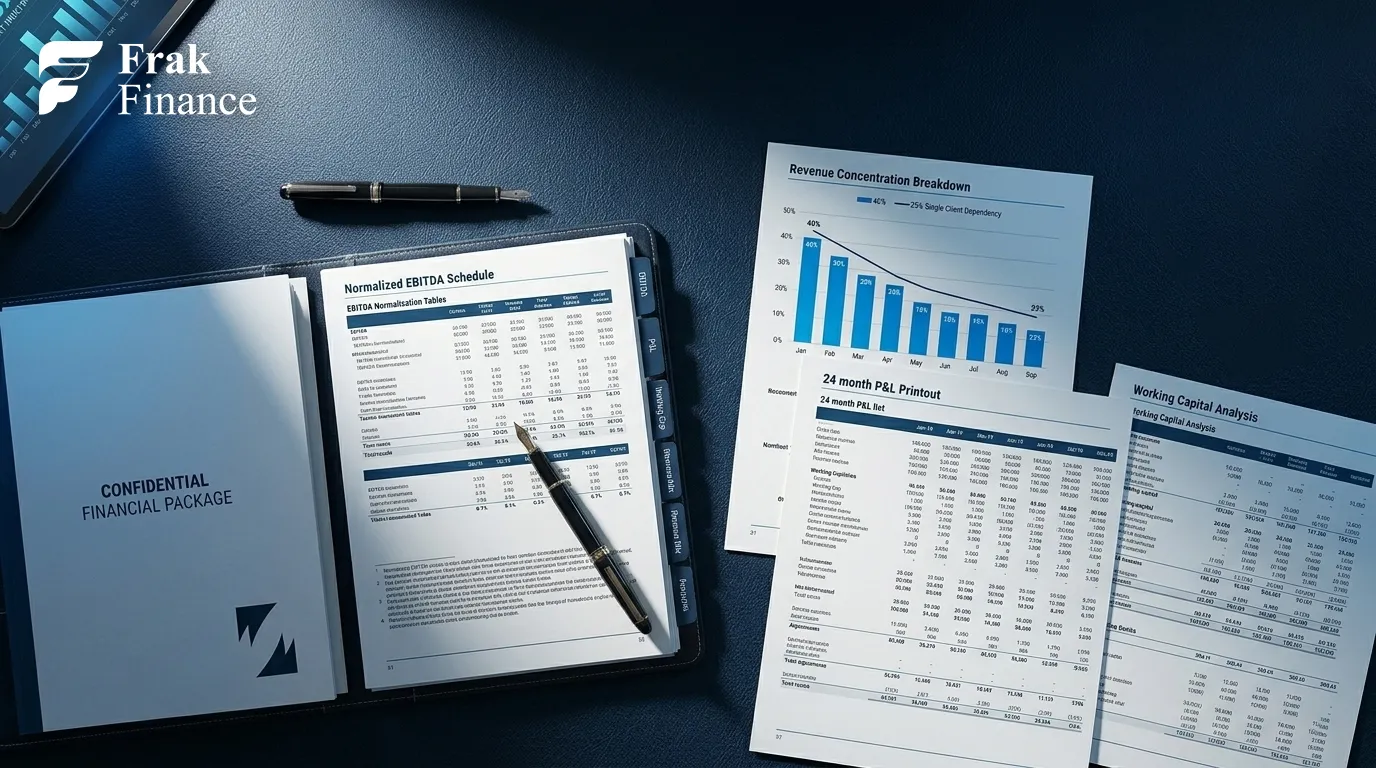
In 18 months, we cleaned up their financials, diversified their revenue, and built a business that buyers actually competed for.
On paper, this looked like a solid company. $8M in revenue, healthy margins, products that moved. But the owner had a goal: sell the business within 18 months. And when we started looking at things the way a buyer would, it became pretty clear they weren’t there yet. Too much revenue was sitting with one client, the books weren’t clean enough to hold up in diligence, and the owner was still the one making most of the day-to-day decisions. The business worked, but only because the founder was running everything.
Every issue on its own was manageable. But stacked together, they painted a picture no serious buyer would feel comfortable with. The revenue was too concentrated in one place. The financials couldn’t hold up under scrutiny. And the business couldn’t function without the founder in the room. If they went to market like this, they were looking at lowball offers, retrades during diligence, or buyers walking away entirely. We had 18 months to fix all three.
The business wasn’t going to sell itself in the shape it was in. Three problems, three phases. Each one focused on a different layer of risk that would’ve made any serious buyer think twice.
Step 1
Locked meeting dates upfront, set a pre-read process one week before every meeting, and defined who owned what across the CEO, CFO, and board chair. Meetings had agendas, minutes, and action-item tracking so nothing fell through the cracks between sessions.
Step 2
Set a weekly leadership meeting rhythm, defined the month-end close window with a hard target of the 15th and no later than the 21st, and built KPI dashboards with named owners across sales, marketing, and finance.
Step 3
Modeled weekly inflow targets against operating outflows of roughly $197K per week excluding rent and $250K including rent. Rent scenarios, funding needs, and runway were visible in one place and updated on a consistent basis.
Step 4
Pressure-tested unit-level labor costs, revenue targets, and cash break-even assumptions at the location level. Set the FY2026 budget deadline at January 31 with year-end financials due February 15 and assigned clear ownership across the leadership team.
Phase 1
We targeted new mid-tier wholesale accounts and expanded their direct-to-consumer channels so the business wasn’t leaning on one client. Renegotiated contract terms with the top customer to add more structure and protection. Built a pipeline tracker so we could actually see the revenue mix shifting month over month.
Phase 2
Rebuilt 24 months of financial statements, normalized EBITDA, and got a monthly reporting cadence in place. Put together a full buyer-ready package with clean P&L, balance sheet, cash flow statements, and a working capital analysis. The books went from “we’ll figure it out later” to “here’s exactly what you’re buying.”
Phase 3
Documented SOPs across procurement, fulfillment, and sales management. Moved key customer relationships off the founder and onto the broader team. Built out a management structure outline that showed buyers the business runs fine without the owner in the room.
About 12 months in, things started looking very different. Revenue concentration had dropped significantly. The financial package was clean, organized, and ready to hand to a buyer before we even started outreach. The owner was no longer the main point of contact for the biggest account. And when early buyer conversations started happening, the tone was completely different from where we began. Nobody was asking about risk or poking holes. They were asking about growth. That’s when we knew the positioning had shifted.
Metric
Before
After
Growth
ROAS
2.1
4.3
+105%
Revenue Growth
—
+38% YoY
+38%
Customer Acquisition Cost
High
Reduced
-27%
Conversion Rate
1.8%
3.5%
+94%
Average Order Value
$78
$102
+31%
Not everything that made this deal work shows up in a spreadsheet. A lot of the value came from how the business felt to buyers when they looked at it. The financials told a clear story. The operations made sense without the owner explaining everything. And the risk profile was low enough that buyers weren’t trying to negotiate the price down before diligence even started. The business went from something buyers had questions about to something they actually wanted to move fast on.
Dropping customer concentration from 40% to 25% was the single biggest factor in changing how buyers saw the business. One client holding that much revenue will always get priced in as risk.
Documenting operations and moving key relationships off the founder made the business transferable. That changed the type of buyer willing to show up.
Rebuilding 24 months of financials and normalizing EBITDA before going to market took retrade risk off the table completely.
Starting 18 months out gave us time to actually fix things, not just explain them. The $1.2M bump came from preparation, not negotiation.
E-Commerce (Online & Wholesale Retail)
~$8M in Annual Revenue
18 Months
Getting Ready to Sell
Lorem ipsum dolor sit amet, consectetur adipiscing elit. Proin tincidunt tellus sed nisi accumsan vestibulum. In hac habitasse platea dictumst. Fusce ac lacinia quam. Phasellus…





The cash flow improved fast. But the bigger change was how the business started operating day to day.
Duis consequat libero ac tincidunt consectetur. Curabitur a magna sit amet orci mollis vehicula. Morbi at enim a ex mollis sodales ut eu elit. Quisque egestas.